Roman architecture is a topic that fascinates me because it shows how buildings can be used to display power. The Romans accomplished their territorial gains not only by means of military force but also by the reshaping of social structures through infrastructure, engineering, and public buildings. The Romans’ buildings spoke volumes about power, organisation, and civilisation.
One of the most impressive aspects of Roman architecture was its engineering innovation. In one of the technology lectures, we were taught the properties of Roman concrete and how the components of it enabled the concrete to have self-healing capabilities. This inspired me to research further into concrete, and how it became a tool of architectural power within Ancient Rome. The main ingredients used in Roman concrete were hydrated lime, pozzolanic ash, and pieces of fist-sized rocks. Unlike modern concretes, which may have high water content leading to shrinkage and reduced durability, Roman concrete had a much higher level of endurance. This quality is mainly due to the way they compacted and reinforced the structure when building. Notably, Roman concrete still holds up better than several current materials in terms of durability. I find it fascinating that compared to many modern materials Roman concrete is still superior in terms of durability. It raises the question whether contemporary architecture prioritises speed and profit over long term performance and sustainability.

Fig. 1. Three types of concrete. Note. From A global history of architecture (fig. 6.13), by F. D. K. Ching, 2017, Wiley.
There were three main types of concrete used during Roman times, the earliest being opus incertum. The word opus derives from the Latin term for “work” and refers to different Roman construction techniques. Opus incertum consisted of walls built using irregular and uncut pieces of tufa stone embedded into a concrete core. Tufa, a lightweight volcanic stone, was commonly used because it was relatively easy to transport and shape.
Eventually, a more sophisticated look came about when regular stones were used. Another important variation was opus reticulatum, where reticulatum means net-like. This kind of concrete wall consists of diamond-shaped tufa stones that surround a concrete core and are at a 45° degree angle.
This kind of wall-building technique was practiced between the early 1st century BC and the time when the practice of opus latericium became popular in the empire age. In opus latericium, the concrete wall uses bricks. The Romans then invented brick-making techniques. The evolving construction methods allowed the Romans to build increasingly monumental and durable pieces of architecture. This reinforces the visual authority of the empire throughout public spaces and infrastructure.
The development of concrete techniques and heating systems in Rome made possible the construction of bathhouses that became significant parts of life in the Roman Empire. Bathhouses in ancient Rome were not only about cleansing but also were used to exercise, relax, and socialise. A complex like the thermae contained swimming pools, libraries, gardens, sports fields, and racetracks, demonstrating how architecture played an important role in defining aspects of Roman civilisation. Public bathhouses also encouraged communal interaction and reinforced collective Roman identity across conquered territories an example is the Baths of Diocletian; they were designed to hold up to 3,000 people at a time.
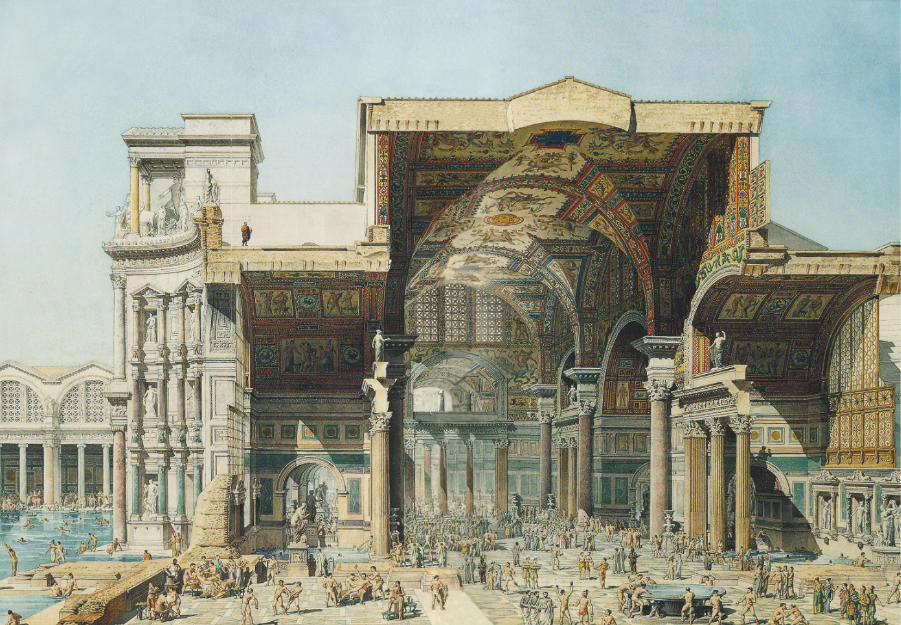
Fig.2 Baths of Diocletian interior render
What I find particularly fascinating about Roman baths is the level of technological sophistication involved in creating comfortable human environments. The complex heating system, referred to as the hypocaust, was one where the hot air was circulated beneath the floors and within the hollow walls. This made it possible to regulate the temperature of various areas. The design guaranteed that a series of sensory experiences could be enjoyed in places like the caldarium (hot), tepidarium (warm), and frigidarium (cold).
Researching about Roman architecture has taught me that Roman buildings were not just buildings but spaces designed to suit human needs. From the materials used to the construction of the space itself, everything was done with a view towards affecting the way individuals experienced their surroundings. It is amazing that so many of these concepts continue to resonate with modern discourse about architecture and experience.
References:
- Ching, F. D. K., Jarzombek, M. M., & Prakash, V. (2017). A global history of architecture. John Wiley & Sons, Incorporated.
- Sear, F. (1998). Roman architecture. Routledge.
Figures:
- Figure 1.Ching, F. D. K., Jarzombek, M. M., & Prakash, V. (2017). A global history of architecture. John Wiley & Sons, Incorporated.
- Figure 2. “File:Baths of Diocletian – Paulin 1880.jpg” by Edmond Jean-Baptiste Paulin no copyright licence as photo is public domain
Leave a Reply