Sociologist Ray Oldenburg described “third spaces” as places outside of home and work where people gather socially and build community. Traditionally, cafés, parks, libraries, pubs, and public squares acted as informal environments where people could interact naturally and feel connected to others.
I find it interesting is the contradiction that modern cities are becoming increasingly populated, yet many people seem lonelier than ever before. I believe digital culture has encouraged people to spend more time isolated indoors rather than participating in physical social interaction. I feel digital culture and online communication have significantly changed the way people interact with each other, often wanting to minimise physical social interactions as much as possible. With the Covid-19 pandemic this became more apparent. Despite constantly being surrounded by people physically and digitally, genuine interaction often feels increasingly limited.
Social media has also changed the way people experience public spaces, this is something I mentioned in a previous blog. In many cafés, restaurants, and shopping environments, people often appear more focused on documenting experiences online than interacting with those physically around them. Spaces may look socially active but in reality, they are very emotionally disconnected. This can make public spaces feel temporary and lacking genuine social connection, rather than socially engaging.
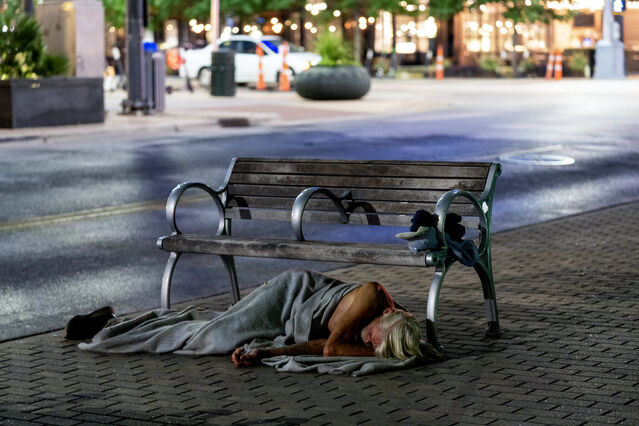
Fig 1. Divided bench with man sleeping on the floor.
Hostile architecture further demonstrates how some urban spaces are increasingly designed to control behaviour rather than encourage comfort or connection, making it hard for third spaces to arise. Features such as anti-homeless spikes, divided benches, or intentionally uncomfortable seating discourage people from occupying public spaces for long periods of time. To me, it is upsetting that people are not able to feel comfortable in public and this feeling is exacerbated for homeless people who don’t have a first or second place to go to. I find hostile architecture particularly upsetting because it treats vulnerable people as problems to be removed from public visibility rather than individuals requiring support and care.
Most modern social places are highly commercialised, and involvement often requires money. This change affects the nature of social interaction, and it may make cities less welcoming to people. Economic pressures may also discourage people from engaging with these spaces regularly, causing many to spend increasing amounts of time isolated indoors instead.
Researching third spaces has made me realise how strongly architecture influences social behaviour and emotional wellbeing. As cities continue to evolve, I wonder if future public spaces will promote human connections or reinforce isolation and loneliness.
References:
- The Fold. (2025, July 8). What exactly is a Third Space and why are we all craving one?. https://www.thefoldleamington.co.uk/blog/what-exactly-is-a-third-space-and-why-are-we-all-craving-one
- Single Homeless Project. (n.d.). Hostile architecture and its impact on homelessness. https://www.shp.org.uk/homelessness-explained/hostile-architecture-and-its-impact-on-homelessness/
Figures:
- Figure 1.National Coalition for the Homeless. (n.d.).Design Against Humanity. [Image]. https://nationalhomeless.org/design-against-humanity/
Leave a Reply