Architecture is often used as a political tool, but few ideologies utilised monumentality and spatial order as deliberately as Fascism in Italy. Upon his rise to power in 1922, Benito Mussolini incorporated architecture as part of Fascist politics and Italian nationalism.
Both architecture and urban planning were used not only as tools for modernisation but as means of asserting political power. Fascism in Italy promoted nationalism, unity, strength, and, most importantly, obedience to the state. Fascism was an ideology and political movement which controlled vast areas of central, southern, and eastern Europe between 1919 and 1945. Fascism in Italy developed as a response to the end of World War One and came into power during the middle of the 1920s.
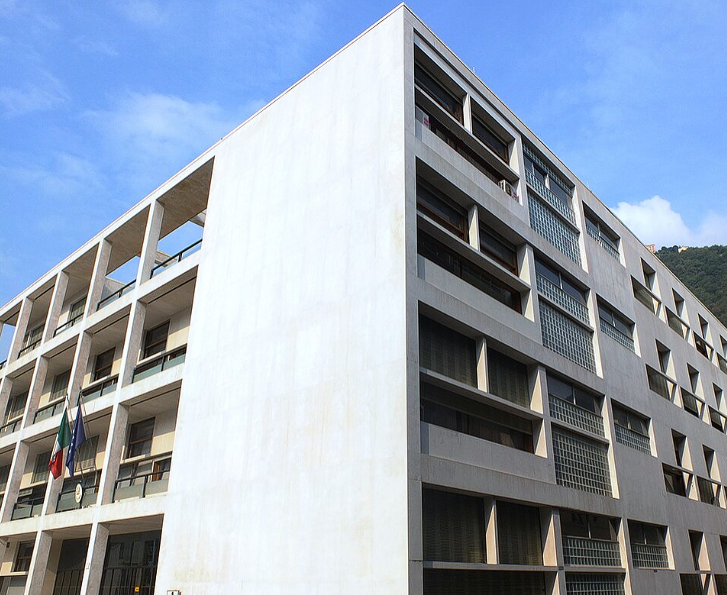
Fig 1. picture of la Casa del Fascio from the corner
Architecture became an important visual tool in expressing these ideals, often through symmetry, monumentality, clean geometries. Clear references to both Classical Rome and modern industrial progress. Contrary to popular belief, Italian Fascist architecture actually did not completely reject Modernism. Many architects believed modernist ideas could represent national progress and power. This resulted in a style often referred to as Fascist Rationalism.
Italian rationalism, also known as Architettura razionale or rational architecture, is an architectural style based on the construction and symmetry of Roman architecture. However, it does not include the decorative features of classicism and neoclassicism. Architects associated with groups such as the Italian Movement for Rational Architecture (MIAR) combined modern geometries with references to Classical Roman architecture and Mediterranean traditions.
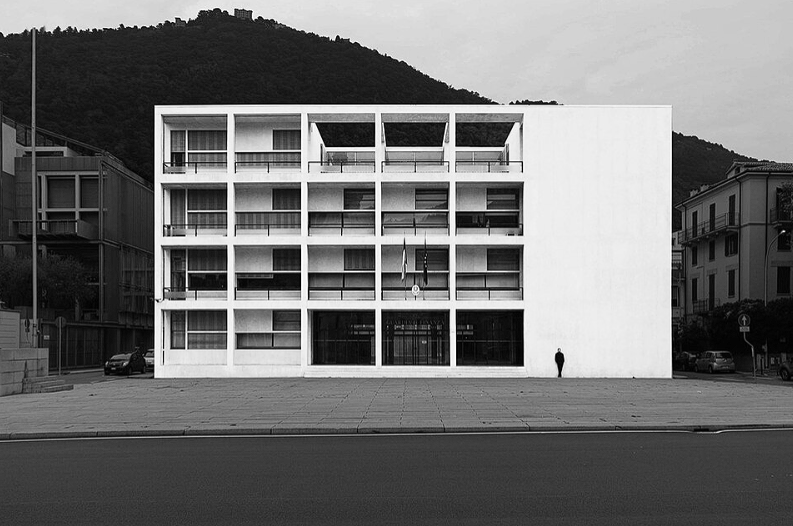
Fig 2. picture of la Casa del Fascio
One of the most prominent examples is la Casa del Fascio by Giuseppe Terragni. The facade of the building at first glance seems to have a clear cut modernist style through its clean white walls and its geometric design. However, it seems to contain many symbolic and even political layers beneath its simplicity. Terragni designed the structure using reinforced concrete, marble, and granite, which is very reminiscent of Roman architecture. The use of large glass panels created what Terragni described as a “glass house” and I believe the transparency of the glass was intended to symbolise openness between the Fascist Party and the Italian public, despite the authoritarian reality of the regime itself. This duality is quite intriguing since the architecture attempts to embody ideas of transparency and openness, yet it acts as the seat of power for a totalitarian ideology.
What also stands out to me is how Fascist architecture blended modernism with references to Italy’s historical past. Mussolini frequently glorified Ancient Rome, and many Fascist buildings attempted to connect modern Italy to the imagery of the Roman Empire. This can also be seen in Palazzo della Civiltà Italiana, sometimes referred to as the “Square Colosseum”. Designed as part of the EUR district in Rome, the building combines modernist abstraction with repetitive arches strongly inspired by classical Roman architecture. Despite its modern appearance, the structure still feels monumental and deeply political.
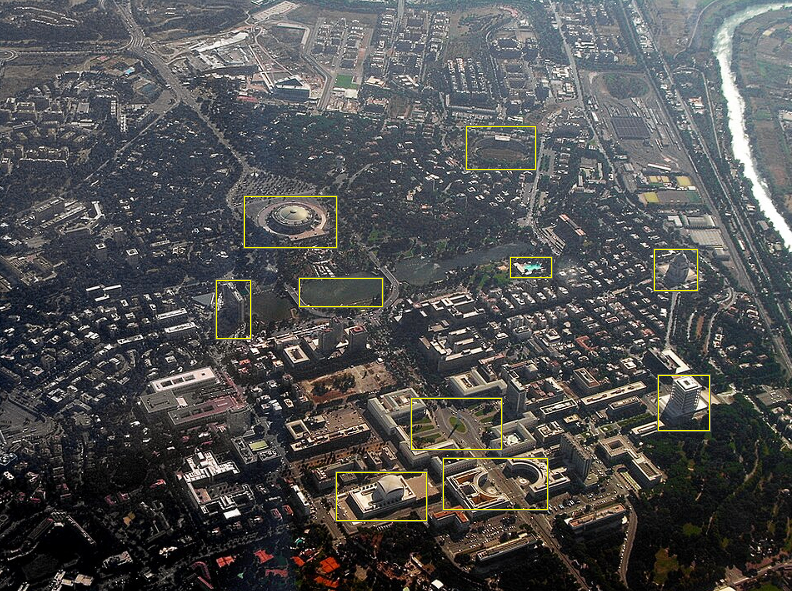
Fig 3. Arial view of EUR highlighting the important buildings
The development of fascist architecture involved the gradual development of designs from individual buildings to urban planning schemes. Architectural designs by people such as Marcello Piacentini were aimed at creating a grand vision for Italy through the use of both imperial Roman imagery and modernist abstract designs. Piacentini oversaw significant urban renewal schemes throughout cities including Rome and Milan. One of these projects was la Esposizione Universale di Roma (EUR).
Fascist and colonial architecture also demonstrate how modernism spread globally alongside political power and colonial influence. Colonial governments frequently imposed European architectural styles on the colonised people and that would represent power and define a new identity in the colonised areas.
Reading about Fascist architecture has made me realise that buildings are never purely functional or neutral. Architectural design can influence the behaviour of individuals and establish the identity of a community. Even in modern times, the notion of politics is expressed through architecture, as it reflects that power is still represented by structures.
References:
- BBC. (n.d.). Benito Mussolini (1883-1945). https://www.bbc.co.uk/history/historic_figures/mussolini_benito.shtml
- Young, G. (2026, March 21). Fascism. Encyclopedia Britannica. https://www.britannica.com/topic/fascism
- Schwartz, H. (2020, September 7). Italian rationalism. Designing Buildings. https://www.designingbuildings.co.uk/wiki/Italian_rationalism#Examples_of_Italian_rationalism
- Ching, F. D. K., Jarzombek, M. M., & Prakash, V. (2017). A global history of architecture. John Wiley & Sons, Incorporated.
Figures:
- Figure 1. “File:Casa del fascio angolo.jpg” by Steffmcr licensed under CC BY-SA 4.0. To view a copy of this license, visit https://creativecommons.org/licenses/by-sa/4.0/
- Figure 2. “File:Como – Casa del Fascio – 27-09-2017.jpg” by Danny Alexander Lettkemann licensed under CC BY-SA 4.0. To view a copy of this license, visit https://creativecommons.org/licenses/by-sa/4.0/
- Figure 3. “File:Eur aereo edit.JPG” by Marten253 licensed under CC BY-SA 3.0. To view a copy of this license, visit https://creativecommons.org/licenses/by-sa/3.0/
Leave a Reply