As global warming becomes an increasingly urgent global issue, architecture is being forced to confront its environmental impact. One problem revolves around the significant role that structures play in generating carbon emissions. This is attributed to the material used for construction, energy usage, and urbanisation processes, hence posing serious concerns on sustainability and responsibility in designing.
Global warming, not to be confused with climate change, refers to the long term rise in Earth’s average temperature. A few reasons why this happens is due to human activities such as burning fossil fuels, deforestation, and large scale cattle farming which release substantial amounts of greenhouse gases into the atmosphere. The gases play a role in the greenhouse effect which is a natural process where some of the sun’s heat energy is retained, thus creating conditions favourable for life. But problems occur where this process is intensified because of increased emission of greenhouse gases leading to high global temperatures.
This occurs when the sunlight enters the Earth’s atmosphere and reaches the planet’s surface, where some of the energy is reflected towards space as heat. Greenhouse gases trap part of this heat by redirecting it back towards the Earth, creating a continuous cycle that increases global temperatures over time. The most common greenhouse gases are carbon dioxide (CO2), methane (CH4) and nitrous oxide (N2O).
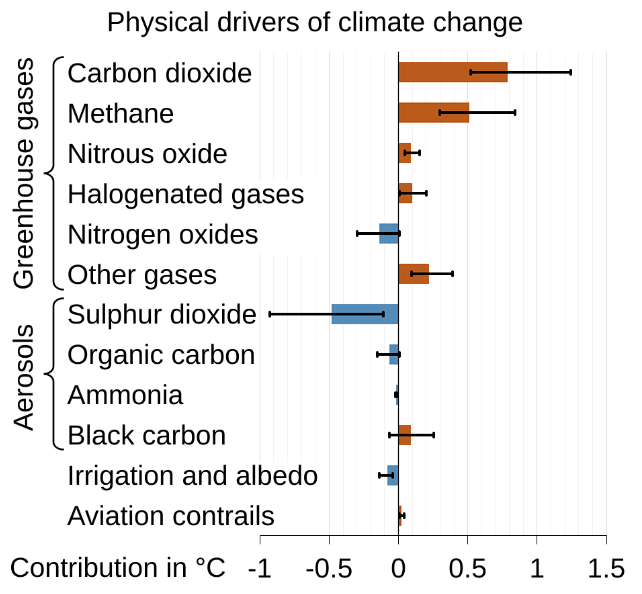
Fig 1. Physical drivers of climate change
Climate change is a bit broader. It encompasses rising sea levels, extreme weather events, droughts, and shifts in ecosystems. What interests me is how architecture both contributes to and is affected by these environmental changes. Currently, buildings make up 39% of the world’s energy based carbon emissions, with 28% from operation emissions. This is energy needed for heating, cooling, and operating buildings. The other 11% resulting from materials and construction.
One of the biggest contributors to carbon emissions within architecture is concrete. Concrete is one of the most widely used construction materials in the world due to its strength and affordability. However, the production of cement releases large amounts of carbon dioxide into the atmosphere which has major environmental consequences. I find the difference between modern concrete structures and Roman concrete interesting. This is something I explored on a surface level in a previous post. Roman concrete was designed for durability and has survived for centuries and even has self-healing properties, whereas many contemporary buildings are often constructed with shorter life spans in mind. This to me feels wasteful due to many buildings these days being quite complex and including a variety of materials, which makes recycling a lot more energy intensive, ultimately defeating the point of it.

Fig 2. Eco bricks made from recycled bottles containing plastic waste.
However, contemporary architecture is increasingly exploring sustainable alternatives such as recycled materials, engineered timber, and low carbon concrete. I believe that this is the right step into the future, but I sometimes question whether sustainability within architecture is always genuine, or whether it can become more of a profitable trend than a meaningful long term solution. Another architectural response to global warming is adaptive reuse, where older buildings are repurposed rather than demolished. I find this particularly interesting because it challenges the idea that cities must constantly rebuild to progress. Reusing existing structures not only preserves cultural and historical identity, but also reduces the environmental impact caused by demolition, waste, and new construction materials.
Projects such as the transformation of old factories, warehouses, and industrial spaces into galleries, apartments, or public buildings demonstrate how architecture can balance sustainability with cultural preservation. During Project 4, I researched organisations involved in adaptive reuse projects, including Portsmouth City Council, Arts Council England, British Council, and Hampshire Cultural Trust. Exploring these projects helped me understand how adaptive reuse can support both sustainability and cultural preservation within contemporary cities.
Researching global warming and architecture has made me realise that sustainability is not only about designing new “green” buildings, but also about reconsidering how and why we build in the first place. Architecture has the ability to shape environmental futures. This means designers now carry increasing responsibility in addressing climate change through both materials and spatial thinking.
References:
- Environmental Protection Agency. (2025, December 29). Overview of Greenhouse Gases. https://www.epa.gov/ghgemissions/overview-greenhouse-gases
- World Green Building Council. (n.d.). Bringing embodied carbon upfront. https://worldgbc.org/climate-action/embodied-carbon/
Figures:
- Figure 1. “File:Physical Drivers of climate change.svg” by Eric Fisk licensed under CC BY-SA 4.0. To view a copy of this license, visit https://creativecommons.org/licenses/by-sa/4.0/
- Figure 2. “File:Ecobricks-are-bottles-packed-with-non-biological-waste.jpg” by Josephine Chan and Ian Christie licensed under CC BY-SA 4.0. To view a copy of this license, visit https://creativecommons.org/licenses/by-sa/4.0/
Leave a Reply